
The Hidden Costs of Manual Data Work in Property Management
December 9, 2025 / Matrixtribe

Property managers spend 30–40% of their time on manual data entry, reconciliation, and administrative reporting. Property management has always been operationally heavy, but the real drag on NOI isn’t the visible work. It’s the unseen, unpaid hours spent copying numbers, updating spreadsheets, fixing errors, and chasing data across scattered systems.
Manual data handling has become the silent tax on every property manager’s day.
In 2025, that model is finally breaking. Technology is shifting the industry away from repetitive admin work and toward real operational intelligence.
This article breaks down the true cost of manual data workflows and why reducing them is now a performance necessity for growing PM teams.
The Time Drain
Property managers are drowning in administrative overhead. According to a 2025 industry survey, more than 60% of property/facility managers cite work-order management, invoicing, and vendor coordination as their top time drains.
These tasks, rent roll entries, accounting reconciliations, vacancy tracking, and lease data updates, may seem routine. But they quickly consume massive amounts of time, especially as a portfolio grows.
For mid-sized portfolios, manual processes scale poorly: what worked for 50 units becomes untenable at 200 or 300. Administrative load grows faster than the number of units managed. Thus, making manual data handling the real bottleneck in scaling operations.
In 2025, teams still spending hours reconciling spreadsheets or manually tracking maintenance and rents are effectively paying a hidden tax on time, accuracy, and growth capacity.
Accuracy Loss
The loss of data accuracy is not limited to the dataset alone; it translates into decisions taken in lieu of that data. Thus, those small human errors in core data sets produce enormous financial harm across a larger portfolio. One of the major losses includes revenue leakage from the rent roll and lease errors. A recent survey of multifamily executives found that 60% of managers encounter financial or lease discrepancies each month (billing errors, misapplied charges, rent-roll mismatches). These recurring discrepancies directly erode NOI if not detected and corrected quickly.
On another front, if maintenance tracking errors occur, they lead to higher-than-usual repair costs. Reactive maintenance is materially more expensive than proactive programs. Industry analysis shows organizations that move from reactive to preventive maintenance typically reduce total maintenance costs by roughly 35–50%, driven by fewer emergency repairs, lower parts and labor premiums, and less secondary damage. That gap is effectively cash left on the table when maintenance is tracked manually and inconsistently.
Across portfolios of 50–500 units, these small mistakes don’t remain small; they compound. Thus, increasing monthly leakage and operational cost overruns in ways that are hard to reverse after the fact.
The Risk Exposure
The cost of manual data is not limited to maintenance and rent roll logs. It creates layers of risk that grow quietly until they suddenly hit hard. Reliance on manual data handling opens the doors to financial, legal, operational, and reputational risks. Some of the risks of manual data handling include:
Risk of Tenant Screening Failures
Before a unit can be leased to someone, a detailed check of their credibility is necessary to ensure a steadfast agreement. If tenant screening is handled manually, it can result in outdated credit checks and overlooked lease violations. Thus leading to bad tenants slipping through. Ultimately, this increases the odds of eviction, rent defaults, or legal disputes.
Audit Trail Gaps
Spreadsheets and ad hoc document storage do not produce reliable audit logs. When data changes repeatedly (rent updates, lease renewals, maintenance records), there’s often no reliable record of who changed what and when. That lack of traceability weakens compliance with financial regulations and jeopardizes transparency toward owners, investors, or auditors.
Governance and Security Challenges
In the absence of a unified system, the tenant files, financials, maintenance logs, and lease data are distributed across email, messaging apps, PDFs, and spreadsheets. In this case, it’s nearly impossible to enforce standard data governance policies such as encryption, role-based access, version controls, or secure backups. This fragmentation raises the risk of data leaks, unauthorized access, or loss of critical records.
The Cost of Slow Decisions
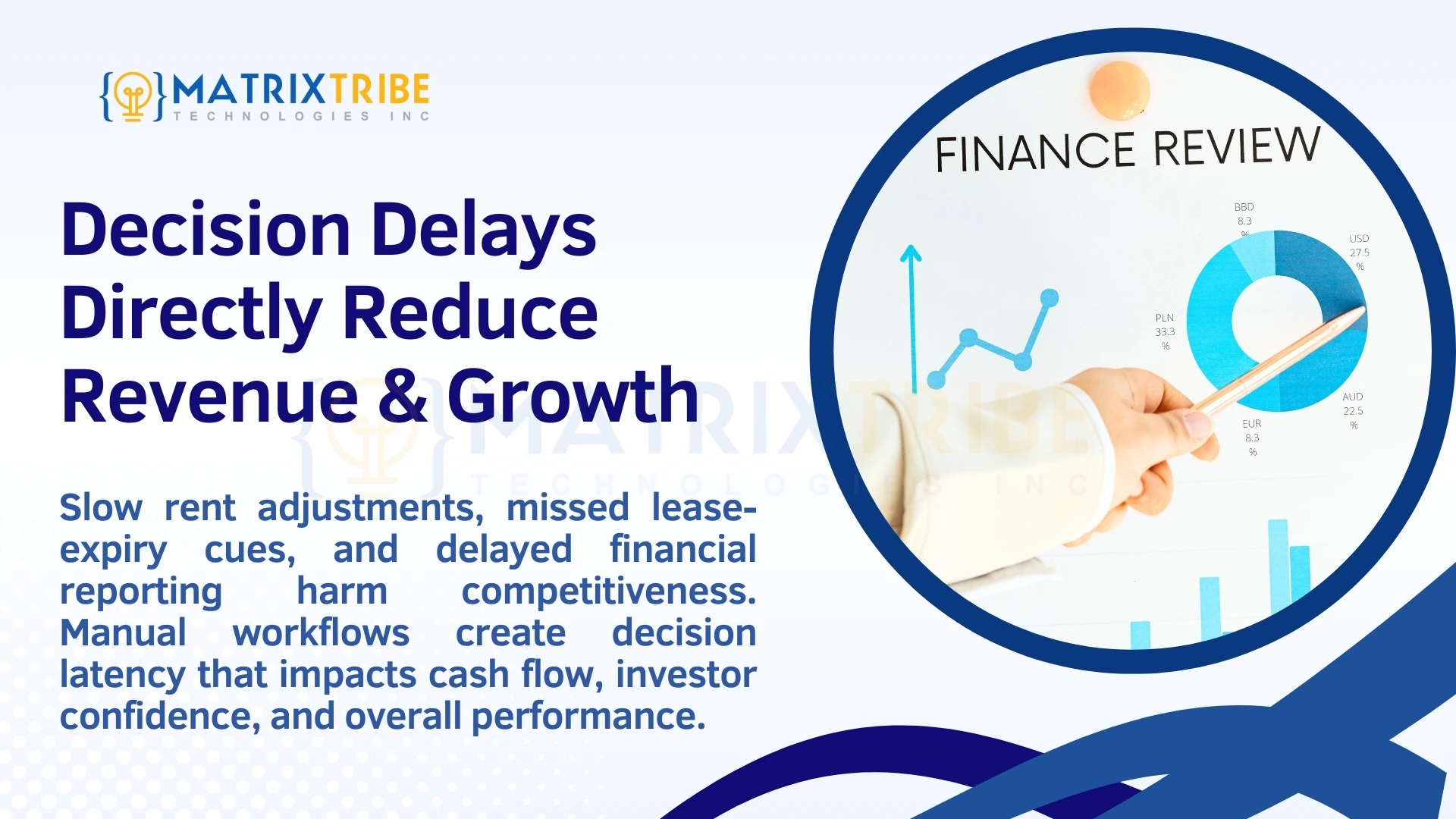
In property management, timing is everything. Slow decisions don’t just delay action; they directly cost revenue and growth. At first, rent adjustments do not reflect a property's true market value, often resulting in below-market rents. Secondly, in manual data handling, it is very easy to miss lease-expiration signals. This leads to unexpected vacancies and months of missed rent.
Lastly, when financial summaries and performance reports rely on manual spreadsheet consolidation, owners get delayed or inaccurate views of portfolio health. This erodes investor confidence and slows capital allocation decisions.
The underlying issue across these scenarios is decision latency; the lag between data becoming available and actions being taken. In fast-moving markets, every day of delay reduces competitive advantage, impacts cash flow, and raises operational risk. Reducing this latency through automated, real-time data workflows is no longer optional; it’s essential for PMs aiming to maximize returns and maintain investor trust in 2025.
Scaling Pain
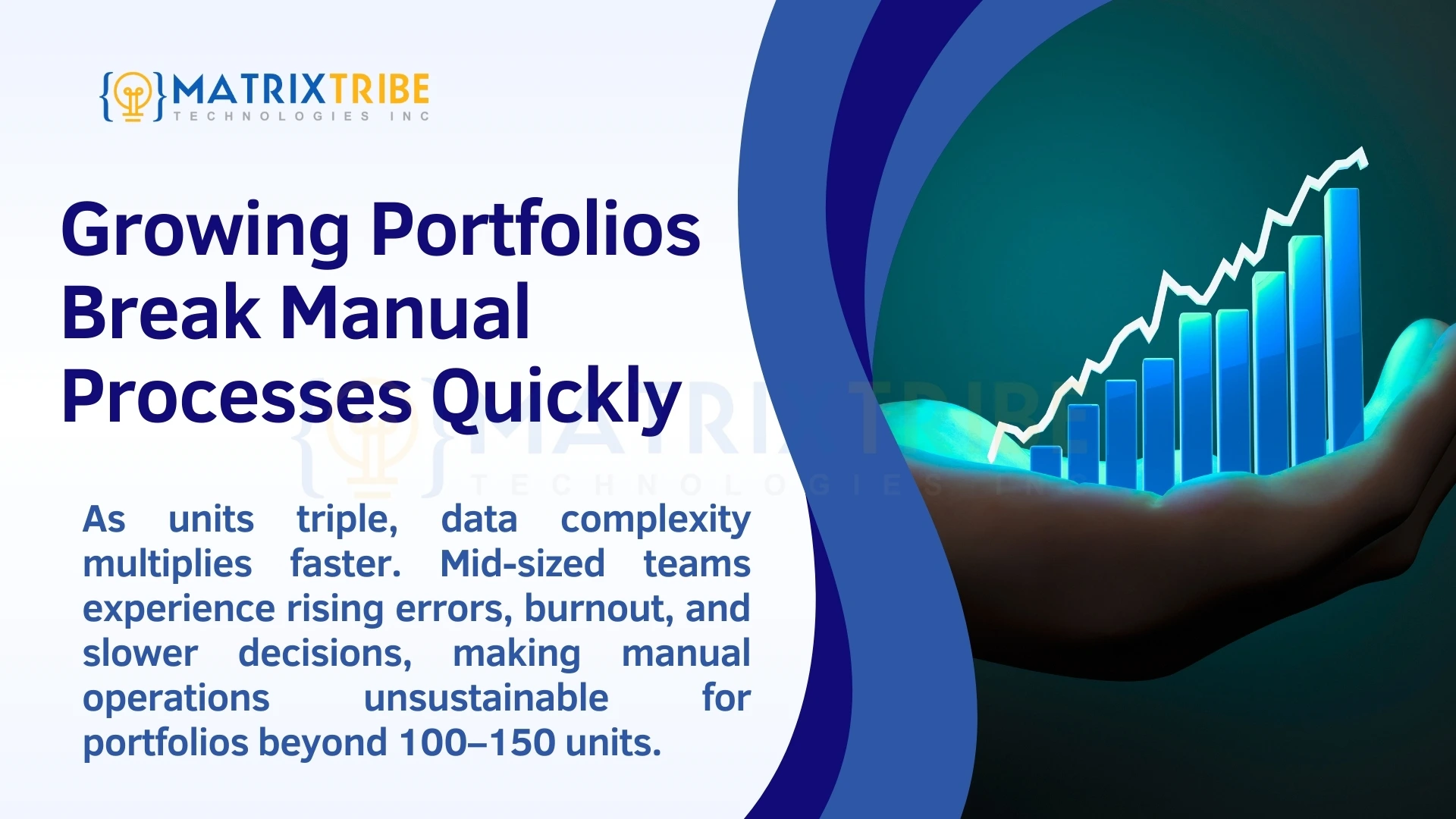
Managing 50 units manually is one challenge, but managing 150 or 300 is a whole different level. As portfolios grow, data complexity expands exponentially, not linearly. Processes and tools that worked for smaller operations quickly break down when units triple or quadruple. Small portfolios can afford manual work; large enterprises often have extensive systems. But mid-sized teams face the sharpest pain point: scaling up without scalable tools.
For example, a property management team managing 50 units might handle manual rent rolls and maintenance logs within reasonable limits. When their portfolio triples to 150 units, manual workloads often multiply by five or more, not three, due to duplicated efforts, error correction, and chasing siloed data.
This disproportionate increase leads to rising burnout, more errors, and slower decision-making. Thus, it creates a vicious cycle that threatens growth and operational stability.
The 2025 Mandate: Operational Intelligence, Not More Admin Staff
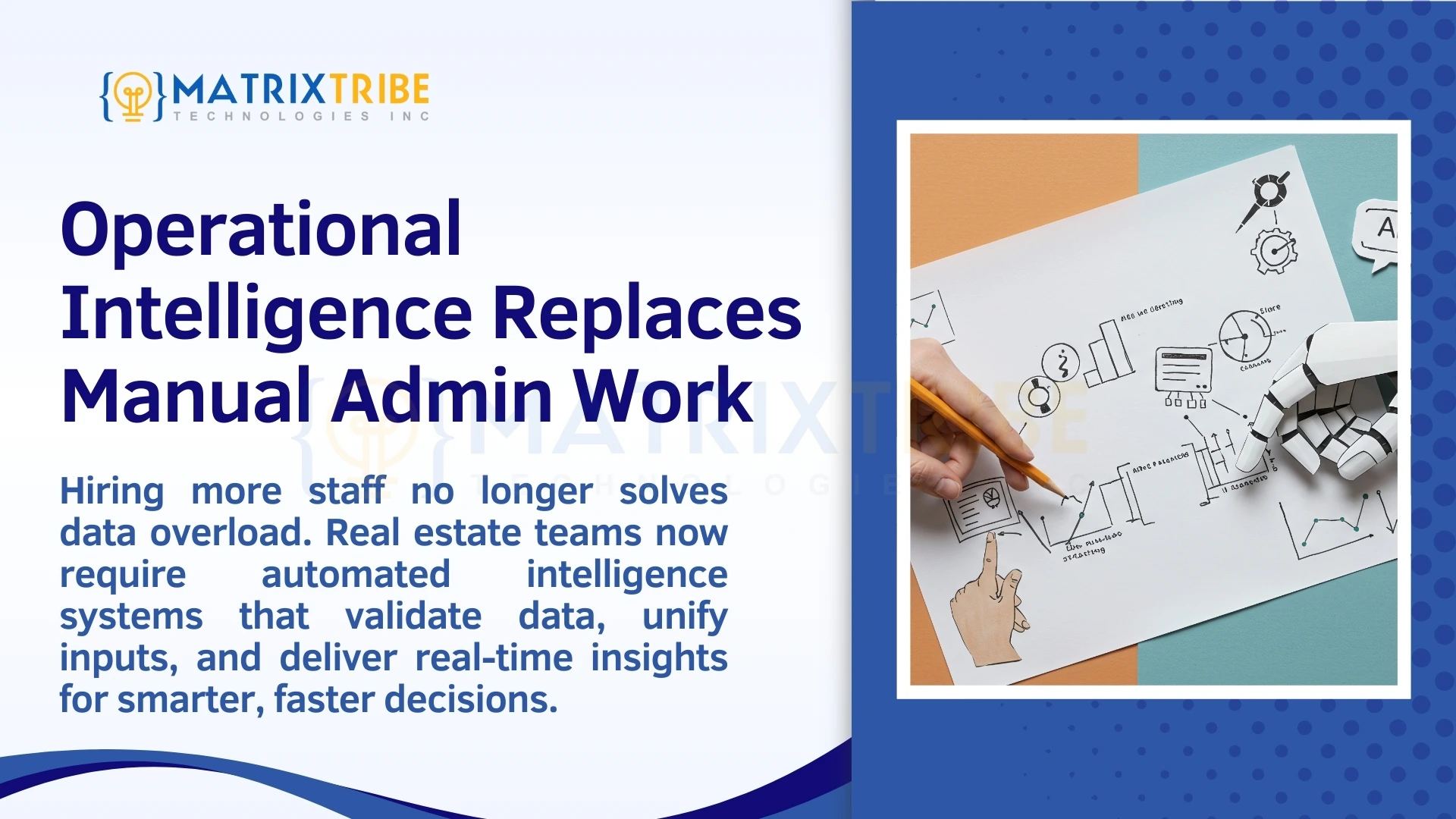
Increasing admin headcount is no longer the answer for property managers facing data overload. Many PMs discover that hiring more staff simply replicates manual tasks; it doesn’t reduce complexity or improve accuracy.
Manual processes multiply with scale, creating more work, not less. The fundamental challenge isn’t a lack of hands but outdated workflows rooted in reactive data collection. The real shift is moving from endless “data collection” to true data readiness. One where information is structured, accessible, and actionable before decisions are made.
This means adopting real estate data intelligence systems that automate data validation, consolidate scattered inputs, and deliver real-time insights to teams. Such systems free property managers to focus on strategic decisions, tenant experience, and portfolio growth, not paperwork.
Final Words
Manual data handling in property management is a costly bottleneck that slows operations, increases risk, and limits growth, especially as portfolios scale. In 2025, staying competitive means moving beyond traditional administrative fixes and embracing operational intelligence that streamlines data workflows, reduces errors, and accelerates decision-making.
Property managers and investors who prioritize data readiness and smart automation unlock new levels of efficiency, accuracy, and profitability. The time to rethink manual processes and invest in scalable intelligence systems is now.
Unlock Efficiency and Returns by Automating Your Workflows
At Matrixtribe Technologies, we offer solutions and services specifically to unlock efficiency and boost financial returns for real estate agencies. Connect with MatrixTribe to see how our AI-powered solutions and machine learning can simplify your operations and scale your portfolio seamlessly.
Published

Latest Article

 July 7, 2026
Explainable AI in Software Development: Why Every Output Needs a Trail
Read Article July 1, 2026
Consistency in AI Governance: Why AI‑Assisted Development Needs Shared Standards
Read Article June 23, 2026