
Why Agentic AI Is a Platform Shift Not Just Another Automation Tool
December 24, 2025 / Matirxtribe

In today’s rapidly changing business climate, leaders need clarity on technologies that truly matter. Agentic AI is a platform shift, not an automation upgrade and that distinction is foundational for executives shaping strategy, governance, and competitive positioning. This article explains the strategic significance of agentic AI while clarifying why treating it as “just another tool” leads to missed opportunity and failed initiatives.
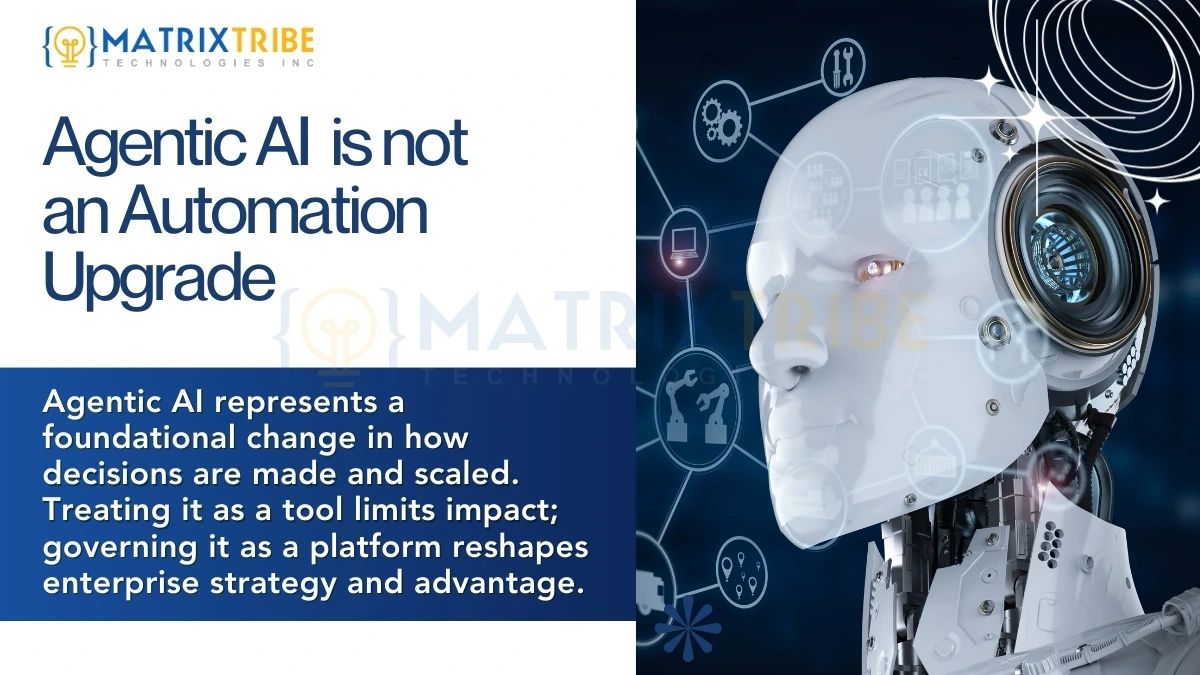
Agentic AI for Business Leaders
The first time many executives hear the term “Agentic AI,” it might sound like another buzzword. But underneath lies a paradigm with potential to redefine competitive advantage. Unlike traditional artificial intelligence built to assist, agentic AI is designed to act independently, making decisions and executing tasks with context and goals in mind. For leaders, recognizing this difference is vital.
Agentic AI has implications far beyond automation. While automation optimizes existing processes, agentic AI changes how decisions are made, scaling human intent and strategy into digital processes at speeds and scope previously impossible. The rest of this article will explain why this is not incremental but transformational.
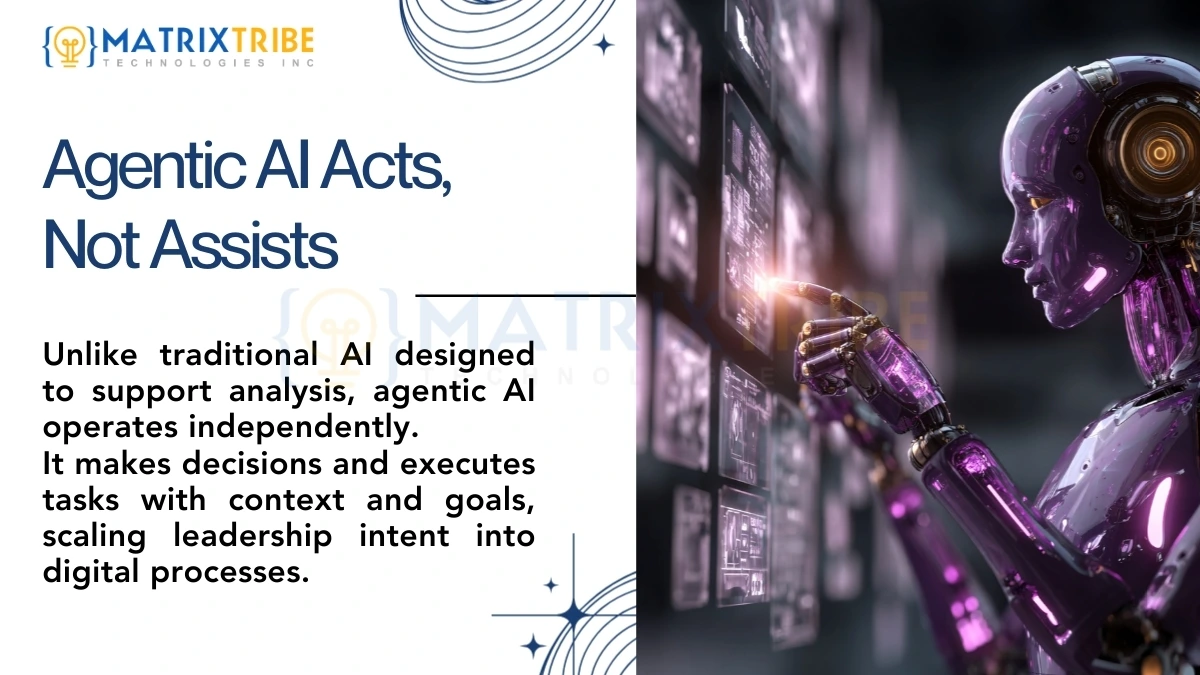
Agentic AI and Its Strategic Importance
At its core, agentic AI refers to systems capable of autonomous decision-making within predefined boundaries. Traditional AI tools follow rules or assist humans in analyzing data. Agentic AI “agents” operate with more context-awareness, adaptability, and goal orientation, essentially acting like digital collaborators rather than passive tools.
For business leaders, the strategic import is clear: autonomous digital agents can make operational decisions, respond to changing circumstances, and even learn from outcomes. This elevates their role from executing tasks to influencing decisions, reshaping business models, workflows, and ultimately competitive positioning.
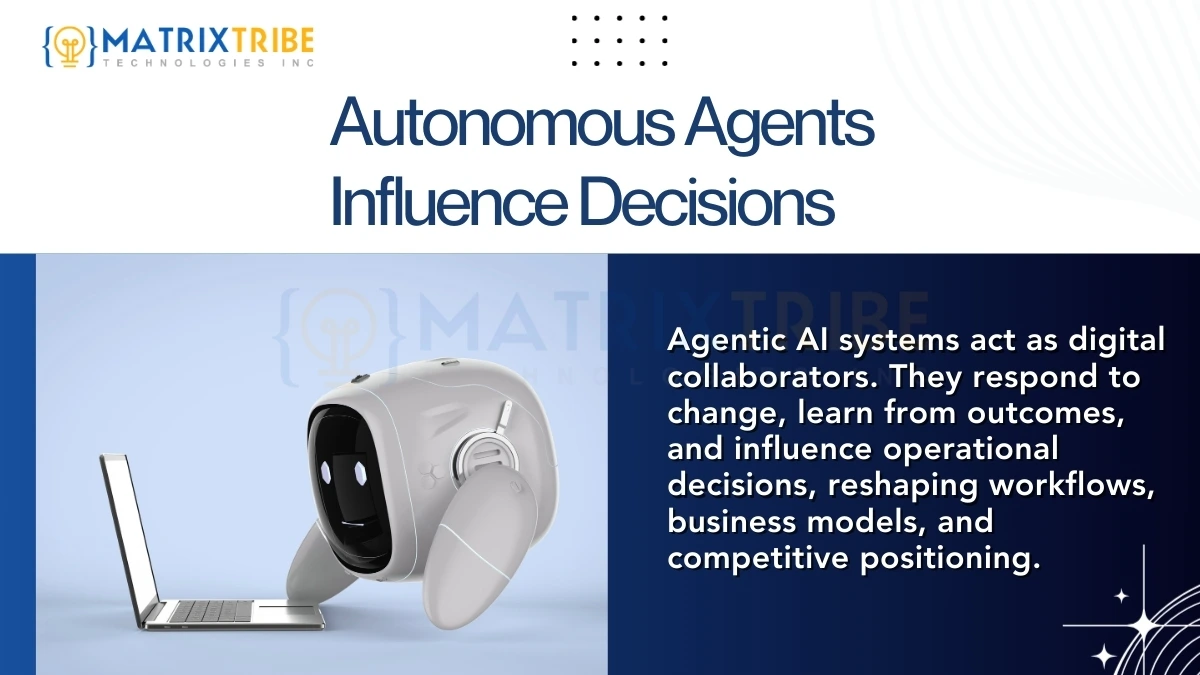
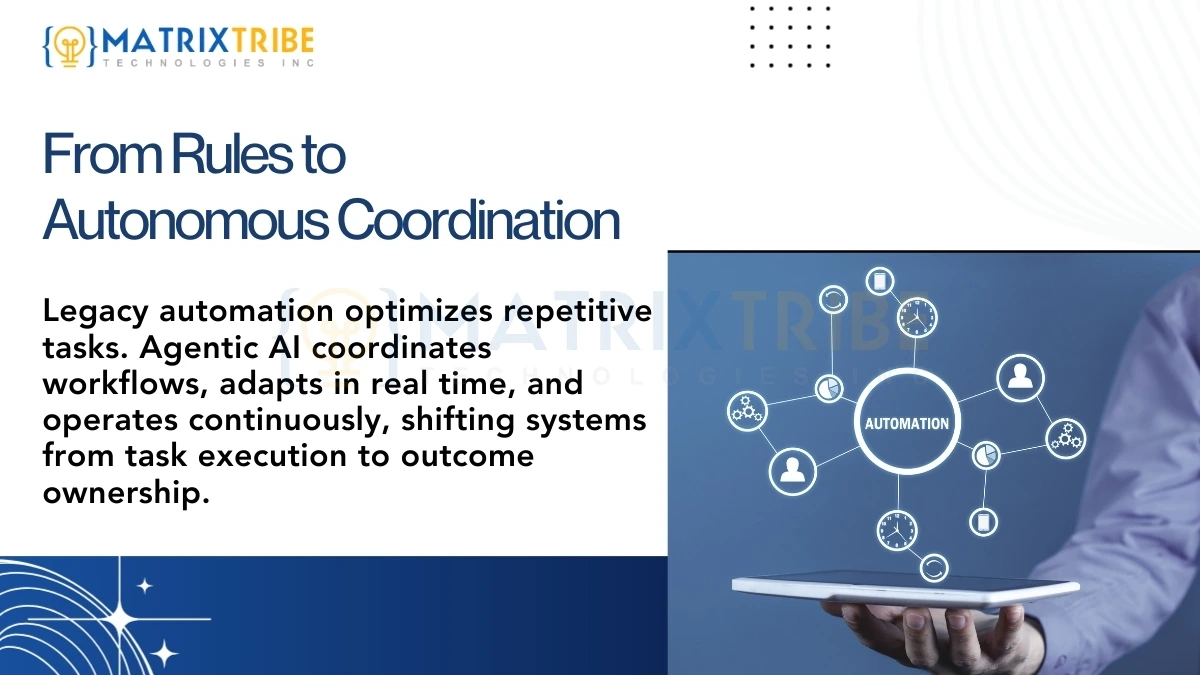
Agentic AI vs Legacy Automation
Legacy automation, whether rule-based scripts or robotic process automation, was built to streamline repetitive tasks. Its goal was to optimize efficiency, reduce errors, and cut costs.
Agentic AI changes the game.
These systems don’t just assist, they act. They don’t wait for a prompt, they coordinate across workflows, making decisions with limited supervision. They operate continuously, not on a per-task basis.
The shift is profound:
From task execution to outcome ownership
From assisting humans to delegating decisions
From linear automation to orchestrated, adaptive behavior
The Market Reality: High Adoption, Low Outcomes
Despite years of enthusiasm and investment, AI success rates in enterprise settings remain stubbornly low. Surveys across industries consistently show:
Over 80% of enterprises have active AI initiatives
Even fewer deliver measurable, sustained value
Many organizations can point to an innovation lab, a chatbot, or a predictive dashboard. But few can show a material shift in productivity, cost structure, or customer experience driven by AI.
This disconnect signals a deeper issue: a mismatch between the potential of the technology and how it’s being positioned. What’s needed is not more tools, but a new frame of reference.
Platform Shifts: A Historical Perspective
To understand the magnitude of this change, it’s useful to examine prior platform shifts in the enterprise:
Cloud Computing: When cloud computing began, many saw it as simply “outsourcing servers.” Today, it’s the backbone of scalable digital businesses. It didn’t just automate infrastructure management; it redefined how products are built, deployed, and scaled.
Mobile didn’t win by shrinking screens. It forced businesses to rethink customer touchpoints, time-to-interaction, and on-demand service. Companies that saw mobile as a platform created entirely new channels and relationships.
Agentic AI: Similarly, agentic AI isn’t just a better automation tool. It’s a platform, a foundation upon which new classes of digital capabilities are built, decisions are scaled, and organizational agility multiplies.
Platform shifts have common traits: they create new leverage points, enable composability of services, and provide foundational infrastructure upon which further innovation accelerates.

Why Agentic AI Is Not Just an Automation Upgrade
For many organizations, “AI” today means automation of repetitive tasks: data entry, report generation, or predictive analytics for efficiency. These are important, but they miss the core of agentic AI: autonomy.
Automation is about efficiency.
Agentic AI is about strategic leverage.
Automated tools follow instructions. Agentic AI systems interpret intent, navigate ambiguity, and make decisions. They are not limited to predefined rules; they adapt. This distinction will matter more as systems interact with real-world complexity, shifting from rule‑execution to context‑aware actions that reflect organizational priorities.
Understanding the Business Value of Agentic AI
Leaders often ask: What’s the real business value here? The answer lies in the concept of productivity multipliers.
Agentic AI isn’t faster automation, it’s a deeper transformation. It creates:
Parallel decision-making across distributed systems
Cross-functional coordination that doesn’t rely on human bottlenecks
Dynamic workflows that adapt in real-time
For example, in supply chain, an agent might autonomously adjust inventory strategies based on real‑time demand, supplier reliability, and cost fluctuations not simply generate reports but take actions with boundary controls defined by leadership.
The Emerging Window of Opportunity
Every platform shift has a window where early movers gain disproportionate advantage. For agentic AI, this window is emerging as regulatory frameworks solidify and industry standards form. Delaying adoption until the technology is “mature” risks ceding ground to competitors who are building strategic fluency today.
Why Most AI Projects Fail in Enterprises
Countless organizations have invested in AI pilots that fail to scale. A common pattern reveals that failure usually stems from treating AI as a side project or efficiency tool rather than a strategic platform. It’s positioned as “tech exploration,” not strategic transformation.
Unsurprisingly, the outcomes follow:
Initiatives remain isolated
Impact is invisible
Momentum evaporates
This reflects a misunderstanding of what’s required. Platform shifts don’t work when delegated. Cloud didn’t succeed because IT ran it as a project. Mobile didn’t transform industries because it was confined to apps.
Agentic AI demands executive accountability and business ownership. Without that, even the most promising pilots stall before scale.
Frequently Asked Questions
How is agentic AI different from automation?
Traditional automation optimizes fixed tasks; agentic AI coordinates decisions, manages workflows, and adapts, effectively owning outcomes rather than executing instructions.
What’s the primary barrier to enterprise AI success?
Failure often stems from misaligned goals, lack of integration into workflows, weak governance, and pilot-phase stagnation, not technological capability alone.
Is agentic AI risky?
Yes, but manageable. Risks include loss of control, bias, and unintended decisions. With proper governance, clear boundaries, and executive oversight, these risks can be anticipated, mitigated, and aligned with corporate risk tolerance.
What’s a practical first step?
Start by defining governance principles, strategic objectives, and ownership at the executive level, before investing in tools or pilots.
Does agentic AI replace humans?
No. It augments human capabilities by taking over routine decision-making, allowing people to focus on complex, creative, or strategic work.
Final Words
Agentic AI represents a true platform shift, not a feature upgrade or automation overlay. Like cloud and mobile before it, it restructures how value is created, not just how work is done. The lesson from history is clear: tools follow structure and structure follows governance. While execution starts with strategic intent.
If we accept that Agentic AI is transformational, then we must govern it as such—from the top, with clarity, accountability, and urgency.
The next challenge is not capability, it’s how enterprises govern speed, risk, and responsibility. Leaders must approach it with strategic clarity, governance, and a long‑term mindset.
Transform Your Enterprise Intelligence
Agentic AI requires more than experimentation. It requires the right architectural foundation, governance model, and decision framework.
At Matrixtribe Technologies, we work with leadership teams to design Agentic AI systems that scale responsibly and deliver long-term value. Contact us to explore how your organization can prepare for the AI platform shift.
Published

Latest Article

 July 7, 2026
Explainable AI in Software Development: Why Every Output Needs a Trail
Read Article July 1, 2026